




When Ivan climbed onto Baba Yaga’s self-driving sleigh in what is now a classic fairy tale, he probably wasn’t thinking about the legal framework under which that ride would take place. But we’ve moved on from the realm of 1960s fiction to a reality where questions like these are, quite genuinely, worth asking.
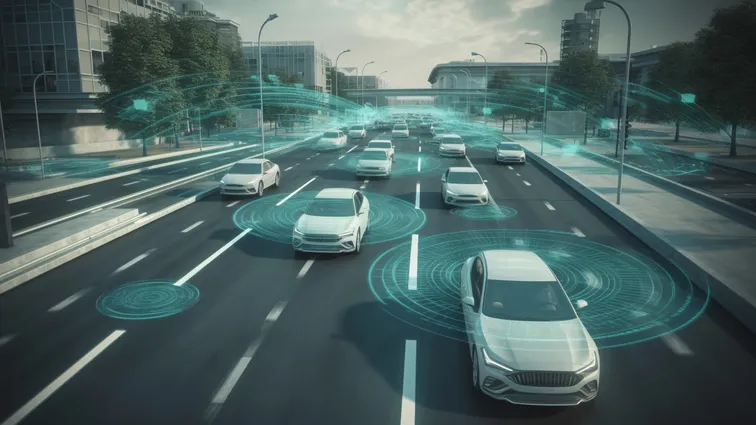
One of the biggest trends in recent years has been the spread of automation into almost every area of our lives. Unsurprisingly, this has also affected the way we drive motor vehicles as we’ve known it until now. Manufacturers came up with the technological solution several years ago: a motor vehicle that, at least to some extent, isn’t actively driven by the driver but instead drives “on its own.”
What held this technology back, however, was the legal framework. That is now gradually changing, and the Czech Republic is not lagging behind. On the contrary, it is among the first European countries to allow the operation of so‑called automated vehicles. In this article, we briefly take a look at what the Czech legislator has already made possible and how the new legislation may affect liability for damage caused.
Automated vehicles
Technology has advanced to the point where we can now distinguish between different types of automated vehicles—from the most basic ones, where the driver is “only” supported by various warning systems and safety features (Level SAE 0), all the way to vehicles that drive entirely on their own, without the need for a driver sitting behind the wheel (Level SAE 5). Czech law introduced the option to use so‑called automated vehicles (Level SAE 3) through Act No. 130/2025 Sb., which amends Act No. 111/1994 Sb. on Road Transport, as amended, along with other related legislation. The definition of an automated vehicle in Czech legislation is based on Article 3(21) of Regulation (EU) 2019/2144 of the European Parliament and of the Council. Under this provision, an automated vehicle is defined as a “motor vehicle designed and constructed to move autonomously for certain periods of time without continuous driver supervision but in respect of which driver intervention is still expected or required.”
These are vehicles with advanced systems that, under certain conditions, are able to take full control of driving without any active input from the driver. That said, drivers are not allowed to completely switch off their awareness of what’s happening around them. The law itself anticipates situations where the vehicle may prompt the driver to take back control.
Liability for driving
The operation of automated vehicles brings a fundamental shift in the existing concept of liability. The traditional model of the driver’s absolute liability for operating the vehicle gives way to a new approach: for as long as the vehicle has taken over control, the driver is relieved of liability for complying with road traffic rules and other obligations related to driving.
If an automated vehicle causes a traffic accident, liability for the resulting damage continues to rest with the vehicle operator, who is required to maintain valid statutory insurance (compulsory liability insurance). This applies regardless of whether the vehicle was being driven by the driver at that moment or directly by the vehicle’s system. However, if it is demonstrably established that the accident was caused by a system failure during automated driving, the operator’s insurer may seek reimbursement of the paid insurance claim directly from the vehicle manufacturer.
(Un)expected legal consequences
Vehicle manufacturers and their local representatives are now facing a significant challenge. If they want to keep pace with technological developments and sell automated vehicles in the Czech Republic, they will need to consider not only the existing content of vehicle documentation and the specific technical parameters of automated driving systems but also issues such as whether clauses in their own insurance contracts are adequately structured. In this case, a lack of due care may have serious consequences.
That’s why the specialised HAVEL & PARTNERS team closely monitors current market developments. Thanks to our long-standing experience and our involvement in the manufacturing and sale of motor vehicles, we are ready to provide comprehensive legal service across all areas related to automated vehicles.