



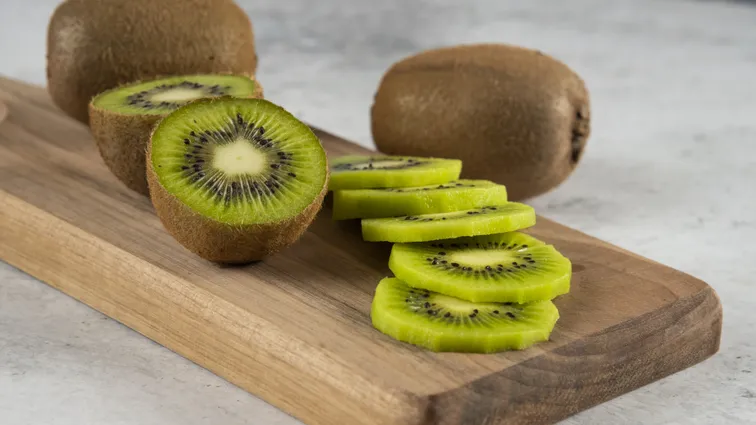


Do you add kiwifruit to your morning bowl of yogurt out of habit, rather than knowing just how beneficial it is? That may soon change. The European Commission has just wrapped up a five‑year regulatory odyssey — and at its end stands a landmark decision: green kiwifruit has become the very first fresh fruit in EU history allowed to carry an authorised health claim. The kiwifruit's path to authorisation also illustrates just how strictly the EU polices oversee the line between marketing and scientifically substantiated claims.
Health claims are not free advertising
Before diving into the kiwifruit story, it’s useful to recall what exactly a “health claim” means in the legal sense. In the EU, it is governed by Regulation (EC) No. 1924/2006 of the European Parliament and of the Council on nutrition and health claims made on foods. In essence, it states that if you want to claim on a food label that a given food product benefits health, you must provide scientific evidence and obtain authorisation for that specific claim.
Health claims used on foods must be based on scientific evidence and specified in the list of authorised and unauthorised health claims available in the EU Register of nutrition and health claims. Among the authorised claims are, for example, “calcium contributes to the maintenance of normal bones.” Claims that are not listed in the Register may not be made on foods.
But what if a producer wants to use a claim that has not yet been listed in the Register, even though it is based on new scientific findings? In that case, a complex process for authorising a new health claim comes into play. The applicant must submit scientific evidence, which is then assessed by the European Food Safety Authority (EFSA). Based on EFSA’s opinion, the European Commission decides whether the claim should be added to the EU Register.
It was through this more demanding procedure that green kiwifruit also had to pass.
Five years of science and Brussels corridors
The story began with an application from Zespri International, the New Zealand leader in the kiwifruit market. Zespri sought recognition of the claim that consumption of green kiwifruit contributes to normal bowel function. Scientists on the EFSA panel therefore had to answer a key question: Is there a sufficiently proven causal link between the consumption of green kiwifruit and the claimed effect?
The panel reached a positive conclusion. Based on the studies, it was confirmed that regular consumption of green kiwifruit contributes to normal bowel function. The result of the five‑year process is that green kiwifruit has now been formally added to the EU Register of authorised health claims, opening up an entirely new chapter not only for Zespri, but for the entire fresh fruit sector.
What exactly may the claim state, and under what conditions?
The authorised claim reads exactly as follows: "Consumption of green kiwifruit contributes to normal bowel function by increasing stool frequency."
The wording is deliberately cautious – the claim must not give the impression of a medicinal effect, since therapeutic claims made on foods are entirely prohibited. At the same time, it must not be misleading or confusing to consumers.
Equally important are the conditions under which the claim may be used. For a producer or retailer to use the claim – whether on food packaging or, for example, in advertising – they must inform consumers of the daily intake needed to achieve the claimed effect. In the case of kiwifruit, that means two green kiwifruits per day (200 g).
Why is this a breakthrough, and what does it mean for the market?
Green kiwifruit has thus become the very first fresh fruit ever to receive an authorised health claim in the EU. It’s worth noting that out of the hundreds of types of fresh fruits available to European consumers, not a single one has held such authorisation until now. The reason is simple: the vast majority of authorised health claims relate to individual nutrients or components – for example, “vitamin C contributes to the normal function of the immune system” – not to specific fruits as such. A claim such as “oranges boost immunity” would therefore almost certainly fail to meet the requirements of the EU authorisation system.
For producers and distributors, this could represent a remarkable competitive advantage. Health claims listed in the EU Register may be used by anyone who meets the defined conditions. Moreover, Zespri can now use the claim throughout the entire EU without needing additional national authorisations.
For food law, this decision sends a signal to the entire sector – it shows that while the path to authorising a new health claim is thorny, it is nevertheless passable.
An authorised health claim as a mark of trust
The case of green kiwifruit is a good illustration of why the EU’s health‑claims system, demanding as it is, remains important. Consumers today are flooded with health claims whose scientific basis is often, at best, questionable. Precisely because EFSA and the European Commission have set the bar so high, an authorised claim carries real weight – it is essentially confirmation that there is verified science behind the marketing communication, not just a catchy slogan. At the same time, this case shows that the path to authorisation is a long and demanding process, and far from simple for businesses.
In practice, it is crucial to adhere strictly to the exact wording of the claim, to state the correct conditions for its use, and to meet all labelling requirements. Any loose rephrasing of the authorised claim may constitute a breach of regulations – one that could expose businesses to sanctions from supervisory authorities.